
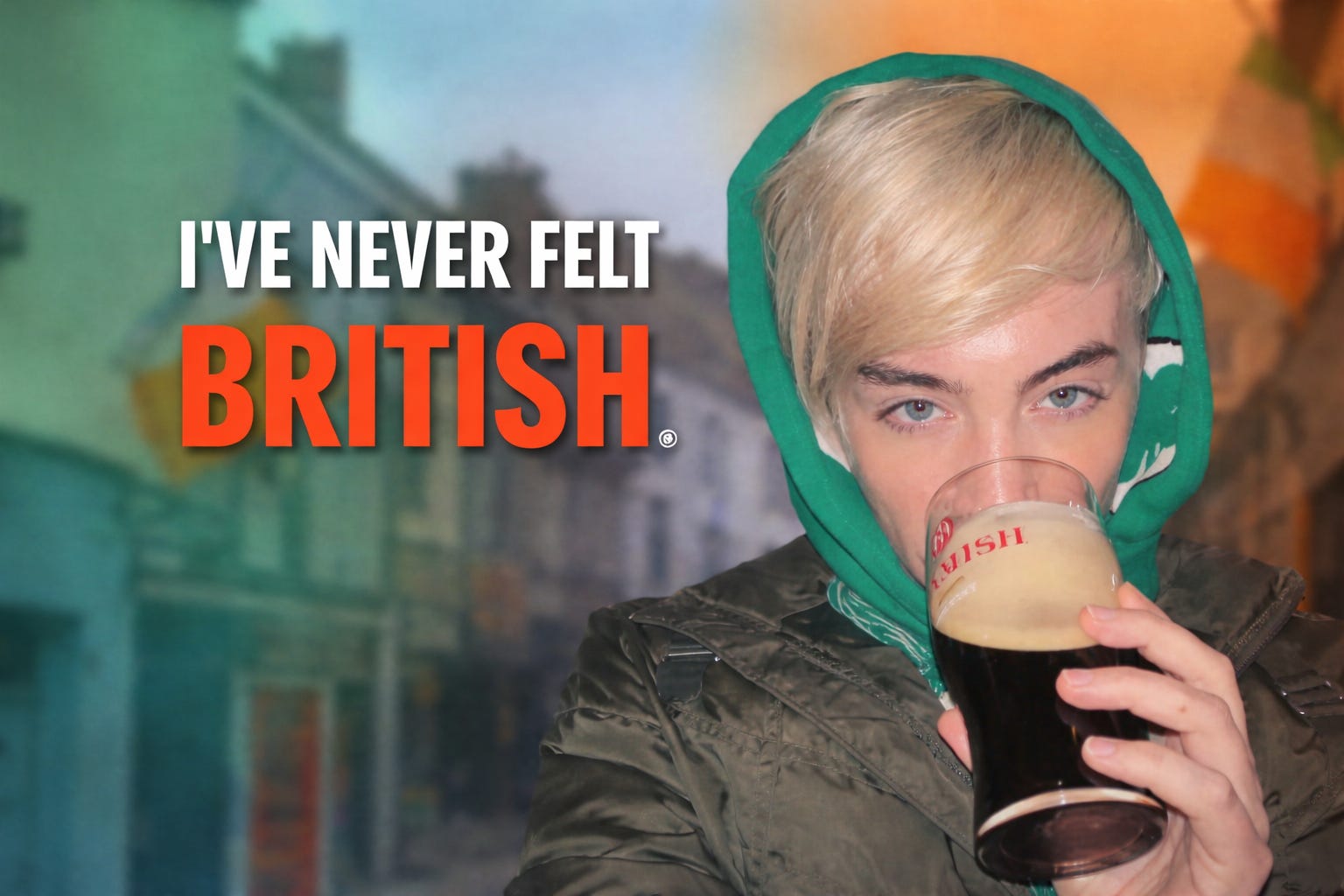
Sometimes all it takes is 72 hours somewhere else entirely. I’ve just got back from Cork for St Patrick’s Day - and despite the short turnaround, something in me has quietly reset. I was talking to my Mum about it, and there’s a sense of safety and ‘home’ in Ireland that we both feel immediately upon arrival.
Most people assume I’m British. The accent does that. But I come from a very big Irish family - culturally, and in terms of my DNA, I consider myself Irish. There’s a little Scottish in there, too, but Ireland is where the roots go deepest. I can’t honestly say that I’ve ever felt British - but I’ve definitely felt like a Londoner if that makes sense.
People seem to love being Irish or having proximity to it in 2026. In a way that would have baffled my younger self, because being Irish in a South-East London school wasn’t exactly what you’d call a social asset in the 90s. There was some name-calling and mean stereotypes. My friend Catriona had it worse - she carried her parents’ accent, and that made her a target in ways I was spared. Our parents stuck together, and I spent my childhood in an Irish diaspora spread out across the many suburbs and corners of South London.
I don’t begrudge anyone their Irishness, adopted or inherited. As long as the history - the real history and the brutal weight of it - is understood, what’s the harm? Ireland earned its moment, and I love seeing people love it. It irritates me when I see people gatekeeping it. I don’t care if you’re a ‘Plastic Paddy’ or not.
Most people’s idea of Ireland is still rolling green hills, catholic churches, and a permanent, misty, soft drizzle. Father Ted country. It’s an image that’s never quite gone away.
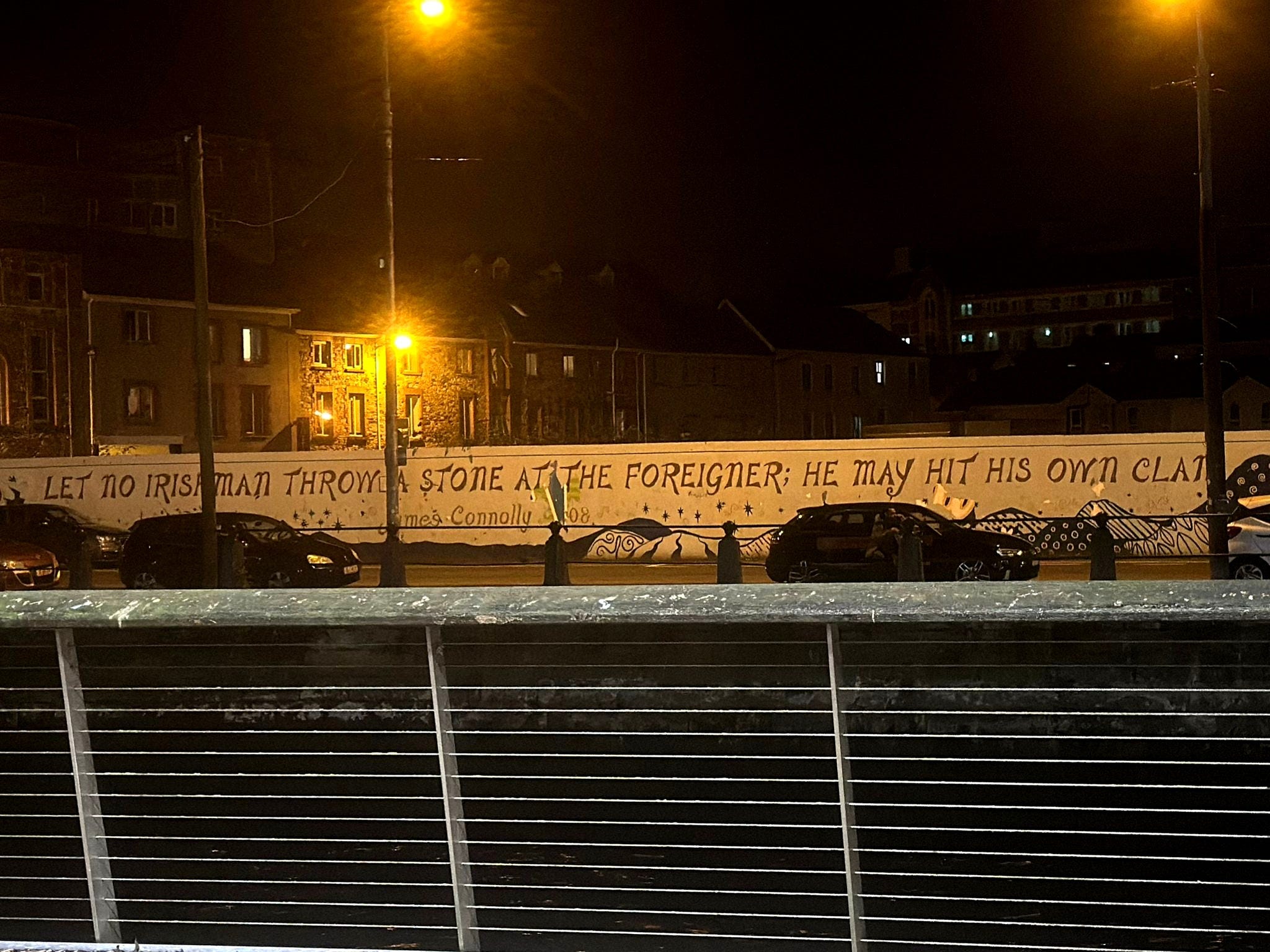
But spend a few days in Cork (which I REALLY recommend), and that version of the country starts to look not just outdated but almost inverted. This is a place that legalised same-sex marriage by popular vote before the UK had even finished arguing about it. Walking through the winding roads and lanes of Cork city centre, you’re met with anti-racist artwork, LGBTQ+ pride progress flags, Palestinian liberation murals – which aren’t tucked into corners but are painted big and bright. Many pubs and bars proudly display messages of inclusion at the bar. Some shop windows do too. And on Sullivan’s Quay, a mural stretching some 50 metres carries a quote from James Connolly, written in 1908: “Let no Irishman throw a stone at the foreigner; he may hit his own clan.” Anti-xenophobia, attributed to a socialist republican executed by the British.
I’ve always been very politically and socially liberal. But never quite knew where it had come from. From the age of 15, on Myspace, I was labelled crazy, a social justice warrior, and often accused of just lending my name to any ‘trending’ social justice movement for attention. It's wild how angry people get at you for caring about the world - though that anger doesn't come from nowhere. Right-wing algorithms actively encourage it. But that's a whole other column.
My Dad has said it to me more times than I can count: “Topher, you cannot fix the world.”
But the truth is, it’s in my blood, and this visit home crystallised that for me. I’ve always cared deeply about inequality and injustice. From a very young age, I’d be firing off handwritten letters to our local MP in Eltham, Clive Efford. And he replied to every single one.
My parents were very well-travelled and worldly - and politically ‘left’ - but were never “loud” about it. But I was. Since I can remember. I’ve lost count of the number of friends, followers, and work opportunities that I’ve lost over the years - thanks to what I loudly stand for. Ironically, most of the people I’ve fallen out with have been members of the ‘left’ who like to police my direct, and sometimes aggressive, tone. I’m constantly called sanctimonious - but I genuinely couldn’t care. Fuck that, I’ve always bullied bullies - and I always will. I don’t care about seeming eloquent or polite.
I’ll say it plainly: Ireland, culturally, feels miles ahead of the UK right now. That’s not something I expected to be writing.
I visited Cork with my best friend, Becca, and her partner, both of Mexican descent but raised in California, with Becca being from the notorious Boyle Heights in East Los Angeles. Their trip to Europe was a welcome escape from the trauma and constant anxiety of the overbearing ICE regime, which has been disappearing, traumatising, imprisoning, murdering, and placing human beings into concentration camps. I am endlessly disgusted by the acts of ICE and the impunity they receive.
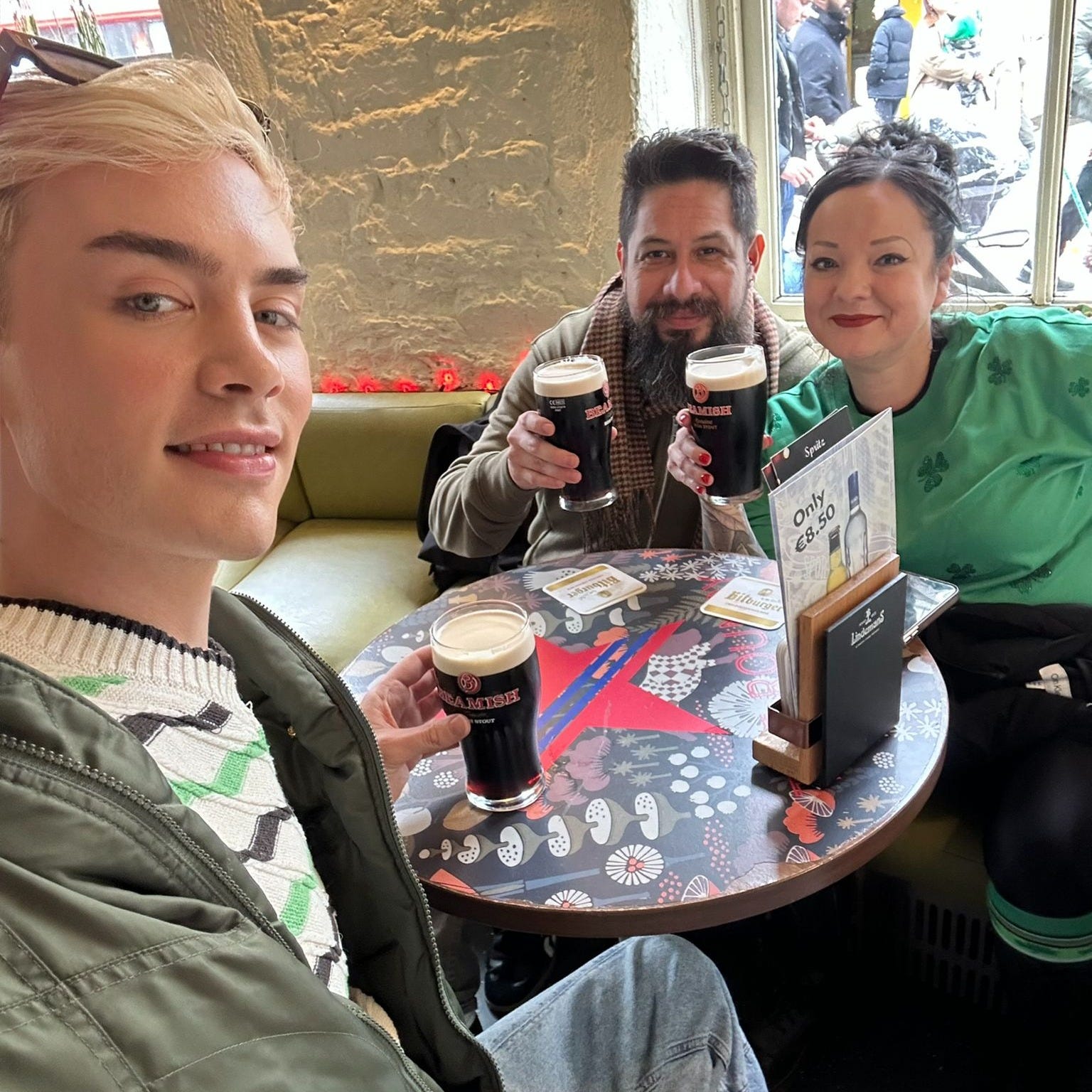
I showed them around London, for a week, on my self-titled ‘Topher Taylor Tours’ - (which are brilliant, by the way) - and then we flew to Ireland.
On St Patrick’s Day, we took a walk into the city centre to watch the large parade which takes place through the centre every year. It was loud, vibrant, and the streets were packed. You could barely move for bumping into someone. The sun even peeked through the crowds and beamed down directly on our section of the crowd - and if you know what Ireland is like during March, you’d realise what a treat this is.
Anyway, during the parade, we noticed a swarm of elegant Mexican flags approaching and music loudly blasting - and then we saw it. The Mexican community in Cork had its own large section in the parade, which was absolutely beautiful to see. There was a huge crowd of beautifully made-up women in traditional Folklórico dresses, performing the Baile Folklórico alongside men in Charro and Mariachi suits.
Considering my company and some of the context of their visit, it was moving to witness and well-needed. I’m so glad that they got to see it. It was almost a metaphor for Becca and my 20-year bond. The Mexican and Irish are sticking together. The Mexican community is being platformed and celebrated - as it should. I’ve fallen in love with Mexican culture over the years and am so honoured to have spent lots of time in this beautiful and incomparable country.
We visited Cork during the summers as kids. I’ve always loved being around my big family. My grandmother was a child of 8, not unusual for Ireland in the 1930s, so there was always a sprawling mass of aunts, uncles, cousins, and family friends to fold yourself into.
Her baby brother Carl was paralysed from the waist down after a workplace accident, but you’d never have known it defined him - because it didn’t. His constant good nature, warmth, and grace are something I carry with me to this day. The happiest, jolliest, kindest man you’d ever meet. He used to let me fly around the garden in his wheelchair while he sat there giggling at the absurdity of it. I think about that image a lot. Mum talks about him the way you talk about someone who changed how you see things.
Carl represented Ireland at the 1972 Heidelberg Paralympics, competing in para athletics throwing events, part of a growing Irish delegation quietly building something to feel triumphant about. He didn’t let his wheelchair get in the way of living - and I understood that even as a child. He represented something bigger than himself without ever making a fuss about it. In March 2026, he was honoured by Paralympics Ireland.
On this trip, I met his son, my cousin Brendan - a mini Uncle Carl in every way. I love Brendan. Like Uncle Carl, he has such a warm and welcoming presence - one that makes me feel safe and at home. That same warmth, all over again. I feel lighter for having seen him.
I’m home now. Back in London. London has spent decades telling itself it’s the progressive one - the open city, the tolerant one. But tolerance and progress aren’t the same thing, and Cork, a city most Londoners couldn’t point to on a map, is making that distinction visible.
Meanwhile, Britain feels like it’s moving backwards. Racism, homophobia, transphobia - all of it is harder to ignore than it was.
I came back with my senses refreshed and my allegiances confirmed. Some countries earn their reputation the hard way. Ireland earned it, and I’m incredibly proud to be Irish.